
NATA 2026 Learning Formats
Learning Formats
Domains of Athletic Training
Domains – Orthopedic Specialty Practice for ATs
Learning Formats
Format | Length | # of Speakers | Description | Additional Fees/CEUs |
Blended Advanced Track* | 6 hours: 2 hours prework + 4 hours on-site | Varies | Lecture and lab | Yes |
Lecture | 55 minutes | 1-2 | Lecture | No |
Interactive Lecture | 55 minutes | 1-2 | Lecture with engagement triggers | No |
Blended Learning Lab* | 1 hour prework + 2 hours on-site | Varies | Asynchronous lecture and lab | Yes |
Learning Lab** | 2 hours | 1 | Lecture and lab | No |
Forum | 55 minutes | 1-3 | Lectures and facilitated discussion | No |
Free Communications – Oral | 7 minutes | Up to 7 | Lecture | No |
Free Communications – Poster | N/A | Varies | Poster | No |
*Registration required.
**Learning Labs are first come, first served.
Domains of Athletic Training
Domain |
Title |
Descriptions |
Domain 1 |
Risk Reduction, Wellness and Health Literacy | Promoting healthy lifestyle behaviors with effective education and communication to enhance wellness and minimize the risk of injury and illness |
Domain 2 |
Assessment, Evaluation and Diagnosis | Implementing systematic, evidence-based examinations and assessments to formulate valid clinical diagnoses and determine patients’ plan of care |
Domain 3 |
Critical Incident Management | Integrating best practices in immediate and emergency care for optimal outcomes |
Domain 4 |
Therapeutic Intervention | Rehabilitating and reconditioning injuries, illnesses and general medical conditions with the goal of achieving optimal activity level based on core concepts (i.e., knowledge and skillsets fundamental to all aspects of therapeutic interventions) using the applications of therapeutic exercise, modality devices and manual techniques |
Domain 5 |
Health Care Administration and Professional Responsibility | Integrating best practices in policy construction and implementation, documentation and basic business practices to promote optimal patient care and employee well-being |
Domains – Orthopedic Specialty Practice for ATs
Domain |
Title |
Descriptions |
Domain 1 |
Medical Knowledge | Applying systematic, evidence-based clinical reasoning to evaluate patient history, perform focused examinations, interpret diagnostic findings, and determine accurate diagnoses to guide patient-centered plans of care |
Domain 2 |
Procedural Knowledge | Applying advanced clinical decision making to implement, adapt, and manage plans of care across pre-, intra-, and post-procedural and operative phases to support safe, effective, and optimal patient outcomes |
Domain 3 |
Professional Practice | Applying leadership, collaboration, and reflective practice to advance patient-centered, value-based care through effective teamwork, communication, and continuous professional development |
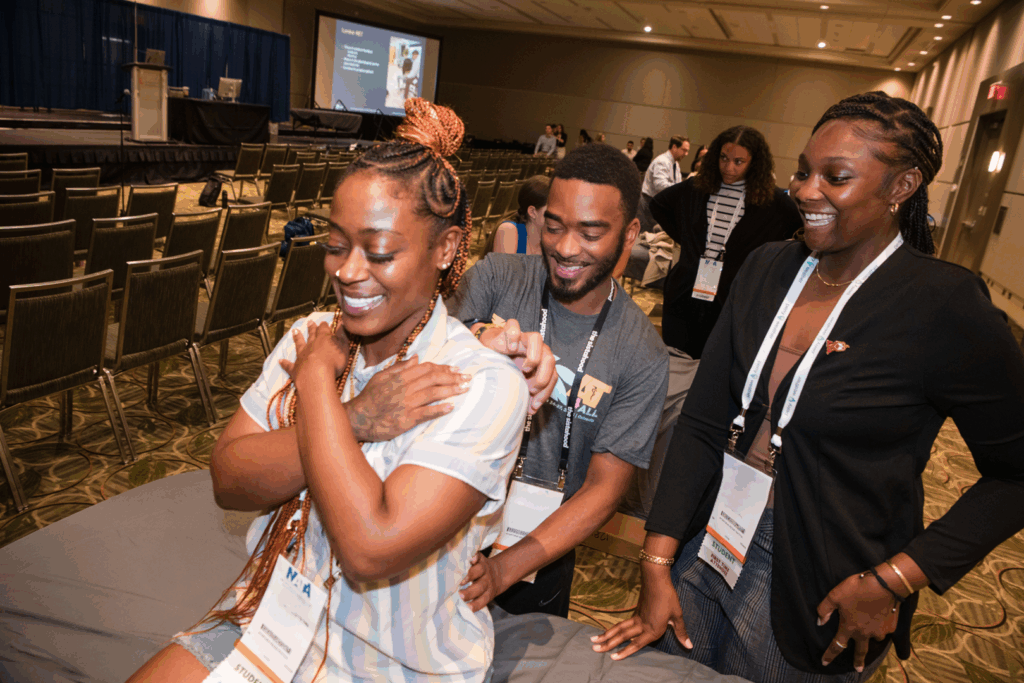
Hands–On Learning Opportunities
At NATA 2026, we’re going beyond the screen and getting back to what athletic trainers do best — hands-on learning.
These sessions deliver the kind of skill-building you simply can’t replicate at home. Whether you’re practicing advanced techniques, experimenting with innovative tools or collaborating in real-time problem solving, you’ll leave ready to apply what you’ve learned immediately in the field.
Level Of Difficulty
Essential
Includes core theory, concepts of applications.
Advanced
Includes in-depth theory, concepts and applications of information and/or techniques that are presented beyond the Essential Level.
Mastery
Includes the highest level of theory, concepts and applications of knowledge of technique within a specific area.